
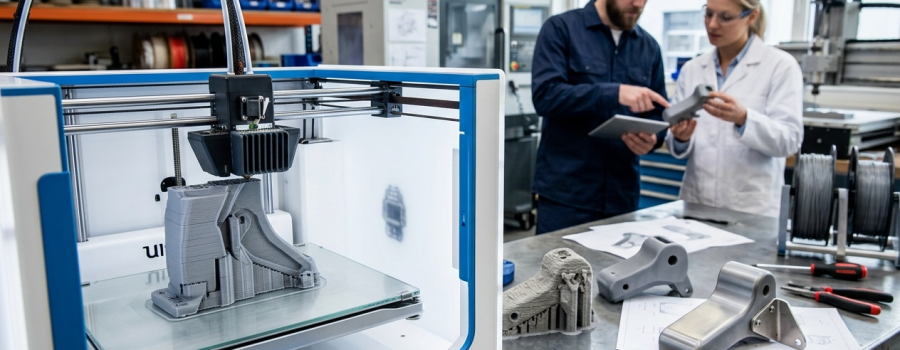
Rapid prototyping is primarily used to quickly convert CAD digital models into physical objects to validate designs, test functionality, and evaluate appearance before mass production.
Products typically produced through rapid prototyping utilize technologies such as 3D printing (additive manufacturing), CNC machining, or rapid injection molding. Rapid prototyping is widely used in:
- Consumer electronics: mobile phone structural components, smart wearable devices (such as watch cases and earphone housings), and electronic product casings.
- Industrial and mechanical: customized robot joints, robotic arm end effectors, and various mechanical function verification components.
- Automotive manufacturing: headlight housings, car dashboards, grilles, and engine peripheral test components.
- Consumer goods: footwear midsole components, fashion accessories, and creative figurine models.
High-tech products (cutting-edge applications)
In the high-end manufacturing sector, rapid prototyping technology (especially advanced metal/ceramic 3D printing) has moved from “verifying models” to “directly producing final high-tech products”:
1. Aerospace Components
- Products: Rocket engine injectors, aircraft heat exchangers, lightweight satellite supports.
- High-tech features: Utilizing titanium alloys or superalloys to integrally print extremely complex internal flow channels, impossible to process using traditional methods (such as casting and machining), significantly reducing weight and withstanding extreme high temperatures.
2. High-end Medical Devices and Implants
- Products: Customized titanium alloy skull/joint implants, dental invisible orthodontic models, spinal fusion devices.
- High-tech features: Achieving personalized medical care tailored to each individual, with the printed metal possessing a biomimetic porous structure that promotes bone cell ingrowth.
3. Robotics and Bionics
- Products: Humanoid robot core skeletons, biomimetic flexible grippers.
- High-tech features: Utilizing carbon fiber composite materials or topology-optimized structures for printing, minimizing weight while maintaining strength.