
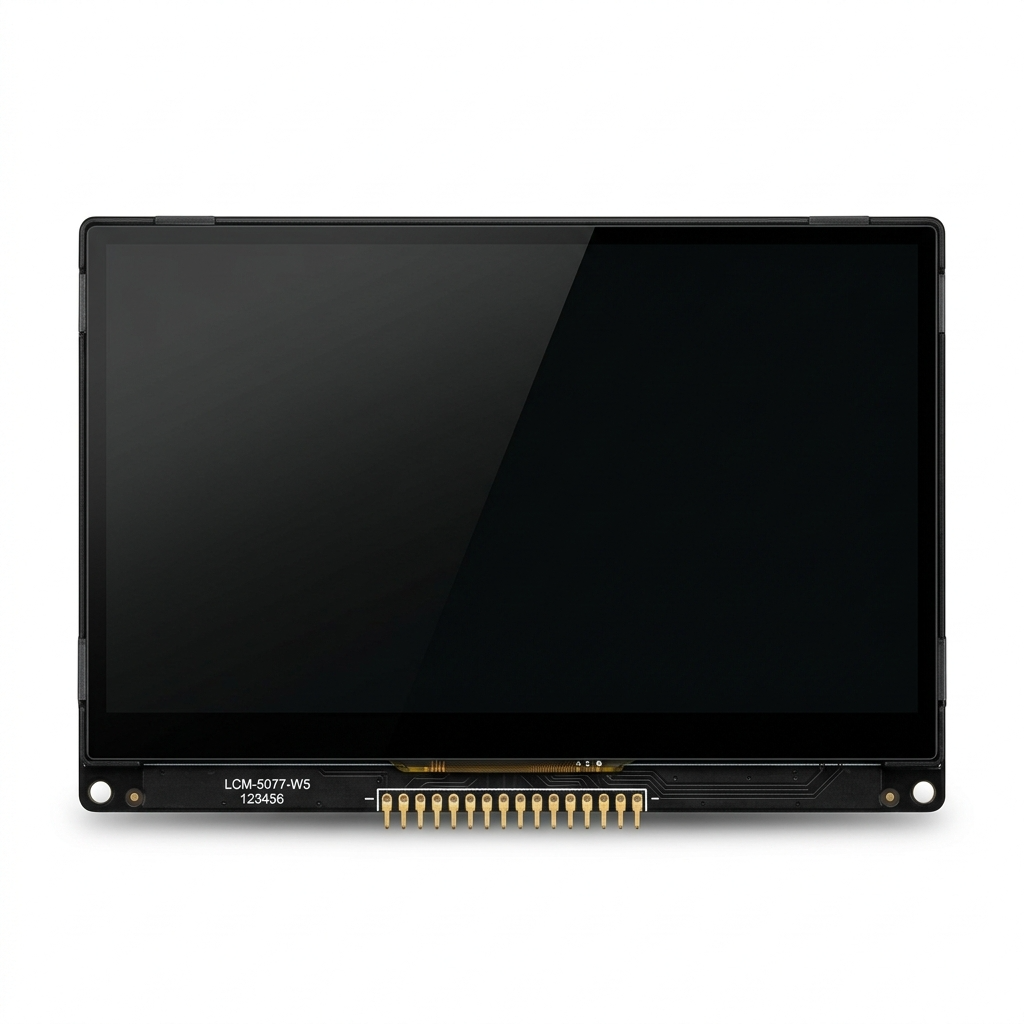


Description
1. Backlight Technology Upgrade: Mini-LED Becomes Standard in High-End LCDs
- Fine Dimming and High Contrast Ratio: A weakness of traditional LCDs is their low contrast ratio. LCDs using Mini-LED backlight modules (often called QD-Mini LED or local dimming LCDs) can achieve independent light control for thousands or even tens of thousands of ultra-miniature LED zones.
- Image Quality Comparable to OLED: This technology significantly improves HDR performance and black level, while retaining the advantages of LCDs such as high brightness, long lifespan, and low burn-in risk, making it a favorite for high-end TVs, gaming monitors, and professional design displays.
2. Performance Enhancement: High Refresh Rate and High Brightness
- Ultra-High Refresh Rate: Thanks to the widespread adoption of oxide panel technology and fast liquid crystal materials, LCD module refresh rates have generally reached 144Hz, 240Hz, and even exceeded 360Hz, widely used in gaming laptops and high-end monitors. • Outdoor High-Brightness Display: The brightness of smartphone and automotive LCD modules has increased significantly in recent years. By improving the transmittance of polarizers and optimizing backlight design, module brightness has generally jumped from 400-500 nits in the early days to 800 nits or even higher, greatly improving visibility in outdoor sunlight.
3. Module Thinning and Enhanced Integration (Narrow Bezels and In-Cell/On-Cell)
- Narrow Bezel Design: Through the adoption of advanced GOA (Gate on Array) technology and more precise packaging processes, the bezels of LCD modules are constantly shrinking, significantly enhancing the visual immersion.
- Integrated Touch: In-Cell or On-Cell touch technology has become mainstream. Integrating the touch sensing layer directly inside the LCD or on the color filter further reduces module thickness and improves light transmittance.
4. Intelligentization and Low Power Consumption
- Intelligent Interaction: An increasing number of industrial control and IoT LCD modules are incorporating “intelligent display” features, integrating SoCs or touch drivers to directly handle simple human-machine interfaces (HMIs).
- Low Power Consumption Technology: Employing energy-saving technologies such as Memory in Pixel (MIP), power consumption during static displays is significantly reduced. This is widely used in low-power scenarios such as smart home control panels and electronic shelf labels.
Reviews
There are no reviews yet.